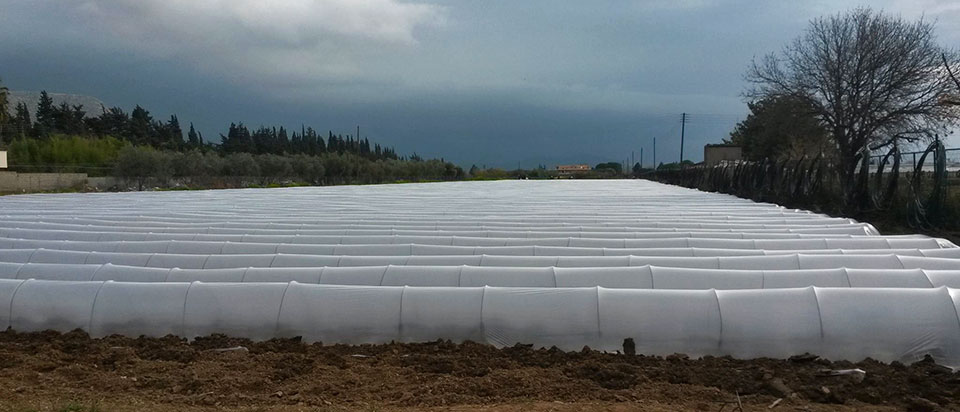
Agricultural films
Solarization Films
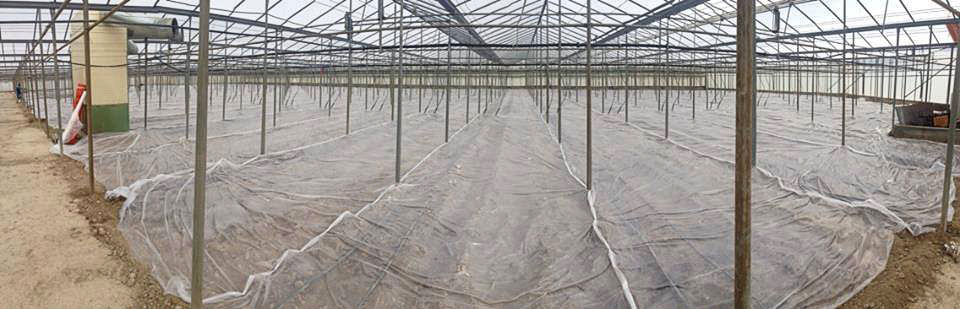
The purpose of using solarization film is the disinfestation of the soil by using solar energy to heat up the soil under the film.
Because of high heat accumulated under the film, soil is cleaned up of weed and soilborne pathogens, such as nematode.
Solarization films are 20 and 30 microns in thickness, transparent and weight per 1000m2 is between 19-30kg, according to the thickness required.
The purpose of solarization is to heat up the soil till the depth of 40cm.
Recommendations about solarization film application are as below:
• Solarization should be done during high temperature season when the solar energy is intensive
• The area that solarization will be applied, should be empty, clean and smooth
• The soil should be saturated with water and kept moist during solarization in order to achieve high temperatures in depth.
• Solarization period is between 4-6 weeks.
Heat Curtain
Heat curtains are used inside greenhouses to decrease heat loss and water droplets, which are condensed on the greenhouse film and fall on plants.
They are thin, transparent, strong and flexible as a result of their high mechanical properties.
Heat curtains are transparent, 30 microns in thickness,and their weight per 1000 m2 is between 29-32 kg
Mulch Films
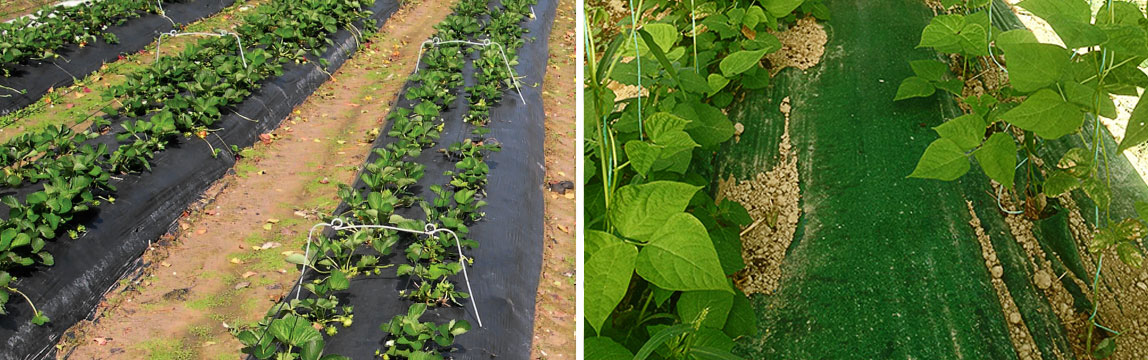
Mulch films are produced in thickness of 20-30-40-50 microns for a lifetime of 24 months at most,and they are used tocover the prepared soil.
Depending on the thickness, the weight per 1000m2 is between 20-50 kg.
The basic benefits of using mulch film are:
• To prevent weed growth
• To prevent the soil from becoming dry
• To prevent evaporation in soil
• To Keep the soil heated
• To prevent the contamination of the crop
For different purposes, black, white, brown, green etc. colors are being used in mulch films.
Black mulch is the most preferred ones because of its high performance in weed control. While white colored mulch films is used to keep the soil temperature low in excessively high temperature
regions. Τhe brown and green colors are used to provide high soil temperature together with weed control.
In addition to these colors, for specific applications red and blue colors are used to improve the plant development.